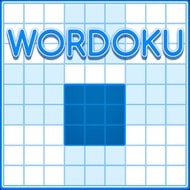
You place a letter into a cell that satisfies its row and column perfectly, then watch the same letter break a rule in the 3×3 box you didn’t check, and the whole section has to be reworked from that one placement onward.
| Genre |
Logic / word puzzle |
| Grid size |
9×9 |
| Difficulty levels |
3 |
| Input modes |
Cell First, Value First |
The Nine-Letter Word Behind Every Wordoku Grid
Every puzzle in Wordoku is built around a single nine-letter word displayed at the bottom of the screen, and that word supplies the entire pool of letters used to fill the grid. Unlike traditional sudoku, where any of nine digits can go in any empty cell as far as the base rules are concerned, this game ties every valid letter directly to that source word, so players who recognize the word early sometimes gain a small edge in predicting likely letter distributions. The nine-letter word itself changes from puzzle to puzzle, which keeps the letter pool from becoming predictable across sessions.
Solving the grid completely also means every instance of that word’s letters has been placed exactly nine times across the board.
Cell First Mode vs Value First Mode
Wordoku offers two ways to approach filling in the grid. In Cell First Mode, players click an empty cell first, then choose which letter to place inside it—closer to how most people solve a physical puzzle by scanning the board for open spaces. The alternative reverses that order, letting players pick a letter first and then place every instance of it across valid cells before switching to the next letter, which suits players who prefer to think in terms of one letter’s full distribution at a time rather than cell-by-cell guessing.
Rows, Columns, and Boxes: The Rules That Don’t Bend
The core constraint never loosens regardless of difficulty: each of the nine letters from the source word must appear exactly once in every row, every column, and every 3×3 box. A placement that satisfies a row and column can still be invalid if it breaks the box constraint, which is the mistake beginners make most often when they check rows and columns but forget the box a cell belongs to. This game does not allow any letter repetition inside those three units under any circumstance, and there’s no partial credit for a placement that satisfies two out of three.
Naked Singles and Other Elimination Tricks in Wordoku
Community terminology carries over almost directly from standard sudoku strategy. A naked single is a cell with only one letter that can logically fit once every other constraint has ruled out the rest, and spotting these early is usually the fastest way into an otherwise intimidating grid. Naked pairs—two cells sharing the same two possible letters—let players eliminate those letters from every other cell in the same row, column, or box, which is a technique regular sudoku players tend to transfer over immediately.
- Start with rows, columns, or boxes that already have the most letters given
- Look for letters that appear frequently across the visible grid first
- Search for naked singles before attempting more advanced elimination
Choosing a Difficulty Before You Start
Wordoku presents three difficulty tiers on its selection screen before a puzzle begins, and the difference between them comes down almost entirely to how many letters are given at the start rather than any change to the underlying rules. Lower difficulty leaves more of the grid filled in, giving players more constraints to work from immediately, while higher difficulty starts with a sparser board that requires more inference before the first confident placement is possible.
Why Hints Cost You in Wordoku
Requesting help during a puzzle reduces the player’s score, which keeps the hint system available without making it a free shortcut. Players chasing a high score tend to avoid hints entirely and instead lean on naked singles and naked pairs to work through difficult stretches, while more casual players use hints freely and treat the score itself as secondary to simply finishing the grid.
- What if two cells in Wordoku seem to allow the same letter? That usually signals a naked pair—if two cells in the same row, column, or box share identical letter possibilities, that letter combination can be eliminated from every other cell in those same units, narrowing down the rest of the grid.
- Does the nine-letter word change between puzzles? Yes, a new word is used for each puzzle, which changes the full pool of letters available and prevents the grid from becoming predictable across repeated sessions.
- Is Cell First Mode or Value First Mode better for beginners? Cell First Mode tends to suit beginners better since it mirrors how most players naturally scan a grid for open spaces, while Value First Mode rewards players who already think in terms of a single letter’s full placement across the board.
Wordoku succeeds by keeping sudoku’s rigid row-column-box logic fully intact while layering language recognition on top of it, and that nine-letter word at the bottom of the screen is what turns a purely numeric habit into something closer to a crossword instinct. Whether a player leans on naked singles or works puzzle by puzzle through Cell First Mode, Wordoku rewards the same patience regular sudoku always has—just with letters instead of digits.