What happens once your skeletal warrior alone can’t dig bones fast enough to keep the army growing? That is the wall every new player hits a few minutes into Right Click to Necromance, and it is the point where the game stops being a mindless clicker and starts asking you to plan an economy.
| Genre |
Incremental clicker |
| Currency |
Bones |
| Core Mechanic |
Click to dig bones, summon undead units |
| Platform |
Browser |
The Bone Economy Behind Right Click to Necromance
Every action in this game runs on bones. You dig them up manually at first, and every unit, upgrade, or summon is priced in the same currency, so bone income is the one lever you are always pulling.
Clicking is genuinely the fastest way to earn in the opening minutes, and new players lean on it heavily. That stops scaling fast once the cost of your next skeletal warrior or wizard climbs past what raw clicking can fund.
By your first few upgrades, the smarter move is redirecting bones toward passive income instead of spending everything on combat units right away. Players who skip this hit a wall where progress visibly stalls, and community shorthand for that stall is simply “getting bone-capped.”
Assistants: Mummies, Scarabs, and Sphinxes
Mummies are the first automated bone diggers most players unlock, working steadily even when you are not clicking. Scarabs dig faster in short bursts, useful once your bone sink outgrows mummies alone. Sphinxes are the most expensive of the three and usually the last piece players add before income outruns spending.
All three keep collecting bones automatically while you are away, which turns the game from a reflex loop into something closer to management. Leaning on constant manual clicking instead of assistants is the most common beginner mistake.
Idle-minded players who like a background system running tend to stack sphinxes as early as they can afford one, while completionist players chase the full mummy-scarab-sphinx roster before spending more on the army side.
Growing Your Skeletal Warrior Into a Wizard-Led Army
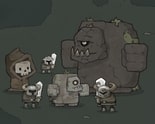
Early on you summon single skeleton units one at a time, and each skeleton, warrior, or wizard added to your undead army is a visible figure rather than an abstract number ticking upward. That visual feedback keeps the clicking loop satisfying even after the economy shifts toward automation.
Wizards are the most bone-expensive unit type, and reaching the point where you can afford one consistently is a milestone most players remember. Once wizards join, the strength of your undead force jumps noticeably compared to skeletons and warriors alone, the kind of snowball moment that keeps numbers-focused players hooked on incremental games generally.
Some players find the stretch between the first wizard and affording several in a row genuinely slow, and that pacing complaint comes up often enough in player discussion to be worth acknowledging rather than pretending the curve is smooth.
Right Click to Necromance’s Pharaonic Skeleton Rebuild
Alongside your active army, bones also feed a long-term reconstruction project: piece by piece, you rebuild a massive pharaonic skeleton that serves as the visible long-term goal. Early on it is barely a fragment, and only heavy investment in assistants and units makes it start to look like a coherent shape.
This dual-track structure is what separates the game from simpler single-purpose clickers: two separate projects grow from the same bone income at once, instead of one number ticking up.
Players who care about the visual payoff check the skeleton’s progress more often than their unit count, treating it as the real scoreboard of a run.
How do you get bones faster once clicking stops being enough?
Redirect early bone income into mummies first, since they establish passive income fastest, then layer in scarabs once mummy income plateaus. Manual clicking should shrink to a supplement well before you can afford your first wizard.
Do assistants keep collecting bones while you are away from the game?
Yes. Mummies, scarabs, and sphinxes all continue digging on their own, which is the entire reason the assistant system exists rather than the game relying on clicking alone.
Does the pharaonic skeleton reconstruction ever actually finish?
It progresses steadily as long as bones keep flowing in, with visible pieces added as your economy and undead army develop, functioning as the long-range goal rather than an early milestone.
Right Click to Necromance rewards players who route bones deliberately rather than spend on whatever unit looks strongest in the moment, and the payoff is watching skeletons, warriors, and wizards fill out an army while the pharaonic skeleton behind them slowly takes shape.