Girls GAMES

Backpack Idle

AI2U: With You ‘Til The End

FNF B Sides

Planet Clicker
Boys GAMES

10 Minutes Till Dawn
Learn To Fly 2

Leader Strike
Sprunki But Better Animations



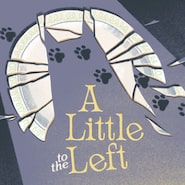
You nudge a stack of soup cans a fraction to the right, and nothing happens. You rotate one label ninety degrees instead, and the shelf exhales into a soft click, as if the screen itself just tidied up. That small snap is the entire pitch of A Little to the Left, a game about restoring order to cluttered household scenes one drawer, shelf, and windowsill at a time. There is no score and no timer, just a pile of pencils or postcards that clearly wants to be sorted.
| Genre | Cozy organizational puzzle |
| Core mechanic | Drag, rotate, and stack objects until they snap into place |
| Structure | Five chapters plus the Cupboards & Drawers expansion |
| Signature disruption | Rookie the cat, who knocks arrangements apart |
Every level starts as a mess: a junk drawer, a spice rack, a box of loose photographs. Your job is to figure out what “tidy” means for that pile, which usually comes down to color, size, shape, or a pattern the game never states outright. Early puzzles accept more than one arrangement as correct; later chapters expect a far more exact reading, and that shift catches new players off guard.
The opening chapter is deliberately gentle. You straighten a crooked cat painting, sort pencils by shade, and clean up scattered sticky notes, and almost every solution feels obvious within seconds. This is where players form the wrong assumption about the whole game: that any reasonably neat arrangement will be accepted.
That assumption breaks fast. Casual players often mistake a puzzle that looks solved but still won’t confirm for a bug, when really the game just wants a more literal reading of “tidy” than the picture suggests.
Community discussion around this chapter often circles back to a nested-Tupperware level, a common first point where players reach for a guide. It is not hard mechanically, but it is the first puzzle that punishes guessing over observing.
Partway through the game, Rookie shows up. He is a house cat with no interest in your carefully arranged bookshelf, and every few levels a “Pet the Cat” interlude interrupts the puzzle flow, letting you scratch him before the challenge resumes. Outside those breaks, Rookie occasionally slinks across the screen mid-puzzle and swats a stack of letters onto the floor.
He adds no fail state and no timer.
What he does is break the illusion of control the rest of the game gives you, and Reddit threads about A Little to the Left frequently mention him by name, usually with some version of “he got me again.”
This chapter swaps sticky notes and pencils for kitchen clutter, and the sorting logic that worked in Home Sweet Home stops being enough on its own.
The Lost Recipe chapter shifts the logic toward kitchen clutter, and it is where symmetry starts doing more work than sorting. Once that clicks, a handful of earlier “impossible” puzzles suddenly make sense in hindsight.
It is a small design turn, but it is the point where the game stops feeling like one trick repeated and starts feeling like a set of related ideas.
Nitty Gritty leans into cleaning supplies and tools, and it is generally seen as the toughest base chapter because several puzzles hide their sorting logic behind texture or material rather than obvious color. Inner Nature follows with leaves, flowers, and pressed plants, where gradients matter more than exact matches.
What both chapters teach, without saying so, is to stop hunting for one universal rule and read each pile on its own terms: a curling stem sits next to another curling stem, not just any stem, and a rag with a particular wear pattern belongs with rags of similar wear, not merely the same color.
Completionists chasing a full clear of both chapters often need a guide for at least one level, and that is treated as normal in most community spaces built around the game.
The final base chapter trades household clutter for a looser space theme, including a level where you connect scattered stars until they form the shape of a cat lying on its back. It is one of the more memorable puzzles in A Little to the Left, frequently mentioned by name in reviews because it rewards playful pattern recognition the earlier chapters rarely ask for.
This chapter also shows the game’s central tension most clearly: some puzzles accept several valid-looking solutions, while others demand one specific configuration that only becomes clear after repeated failed attempts.
That inconsistency is the most debated aspect of the whole game, with some players calling the strict puzzles satisfying once solved and others feeling the precision fights against the cozy framing everything else leans on.
The Cupboards & Drawers expansion adds twenty-five new puzzles built around a layered idea: instead of one static scene, you open and close multiple drawers within a single level, moving objects between compartments. It folds in four additional Pet the Cat interludes, keeping Rookie’s presence consistent with the base rhythm.
Once the main chapters are cleared, Daily Tidy offers one new puzzle every day, and habitual players who check in every morning are the reason many keep the game installed long after finishing everything else.
The trade-off, often raised in community discussion, is that Daily Tidy reuses existing objects and themes rather than introducing new ones, so the habit matters more than the novelty for anyone who has already finished the main chapters.
The game checks for a specific configuration rather than general neatness, so items can be grouped correctly but still fail if their rotation or spacing does not match what the level wants. This is most noticeable in chapters like Nitty Gritty, where texture matters as much as visual grouping, and it is the most common frustration reported by otherwise happy players.
Rookie is the disruptive house cat who appears throughout the game, occasionally knocking over a finished puzzle mid-session and starring in short Pet the Cat interludes between levels. He forces replayed sections and has become one of the most talked-about elements of the entire game.
Yes for players who liked the core loop, since it adds twenty-five puzzles built around opening and moving items between multiple drawers, plus four more Pet the Cat breaks, without changing the sorting logic that defines A Little to the Left.
What stays with most people after finishing A Little to the Left is rarely a single puzzle but the small ritual of it: a drawer settling into place, Rookie darting across a shelf you just finished, and the quiet satisfaction of making a mess make sense.